Mayvun Arc
Brand strategyTone of voiceIdentity refinementBrand kit
A specialist claims management business inside Gow-Gates. Its buyers are insurers who want speed and technology. Its customers are the people making the claim.

the tl/dr
Identity, website, brand guidelines, a PowerPoint template and an asset kit, six weeks from kickoff to launch. The old identity was a placeholder, put together to get one proposal out the door, under a name that stood for nothing.
Two audiences pulling in opposite directions. Insurers pay for automation. Claimants want a person to have considered their case. Gow-Gates picked the direction from the words. We hadn’t shown any design yet.
The website took a few attempts. The first build looked like a software product, and Bellinger sells premium consulting.
Before
It traded as AIAP, short for Australian Insurance Agency Pool. The marketing department at Gow-Gates had put the identity together quickly, while the business was still an idea, so that there was something to attach to a proposal. It was still doing that job when we started.
The name gave them nothing either. Tom Gow-Gates, the CEO, had been through 300 of them before he landed on Bellinger. His verdict on AIAP was that it didn’t mean anything. A collection of vowels.
Bellinger also has to talk to two audiences who want opposite things. Insurers pay the bills, and what they want is throughput, cost reduction and technology. Claimants sit on the other end of the same process, usually on the worst day of their year, and what they want is the certainty that a person actually read their file. A brand that leans hard into automation wins the first audience and loses the second.
What we did
Bellinger sounds like a firm that has been in insurance for eighty years. That buys room for everything else to look new, because the reader has already decided you’re established before they see anything. Tom put it back to us on the call. “You’ve got this legacy institutional in the name, but then as it presents, it presents like a disruptor.”
We showed two directions and made them as different from each other as we could. Standing Order was the institutional one, all authority and permanence. Closed Loop was operational.
Closed Loop won on one argument. Every claims business now says it uses technology, so saying it proves nothing. What Bellinger sells is the judgement that happens before the automation runs. Gow-Gates picked it from the words.
We hadn’t shown any design yet.
Before
After
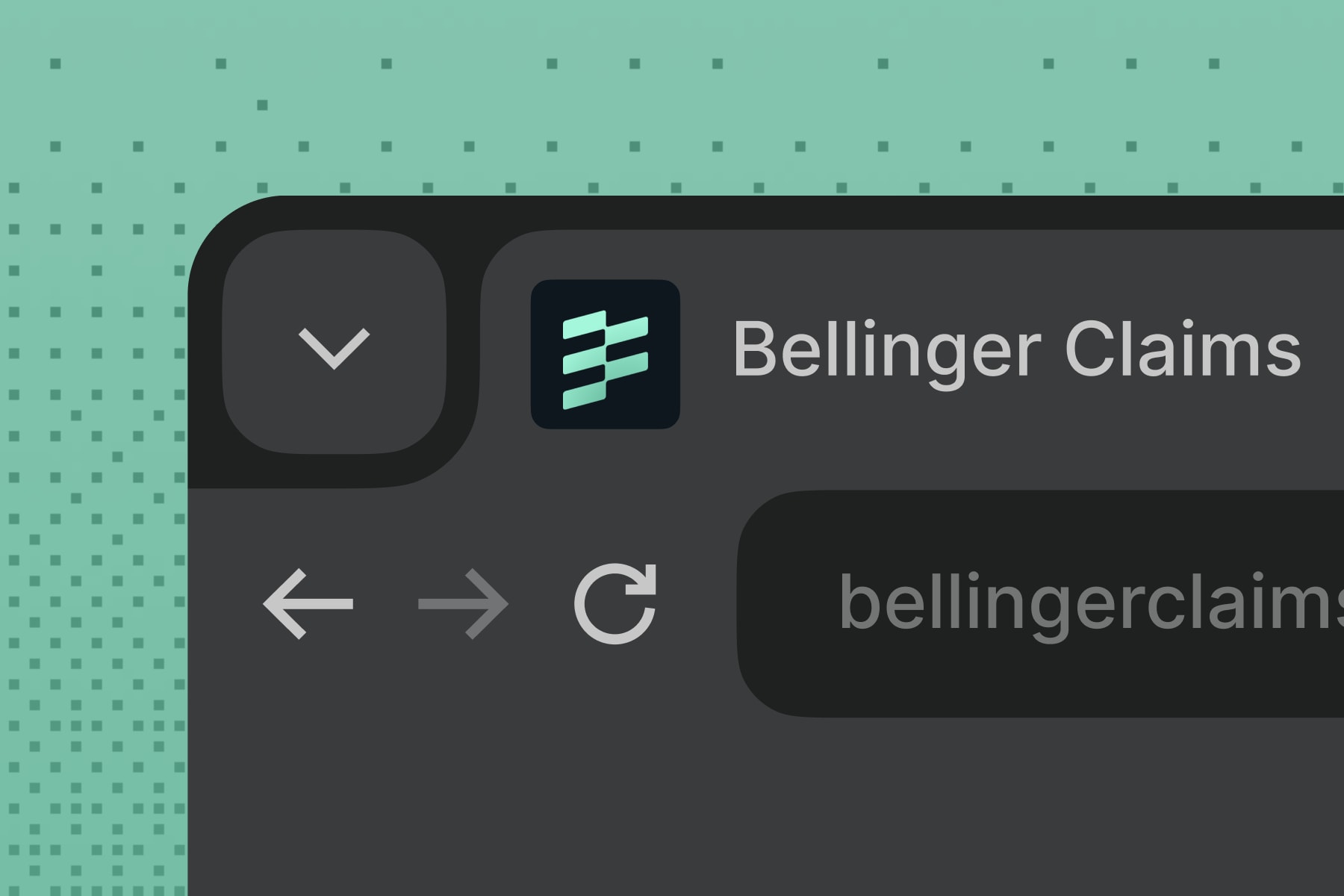
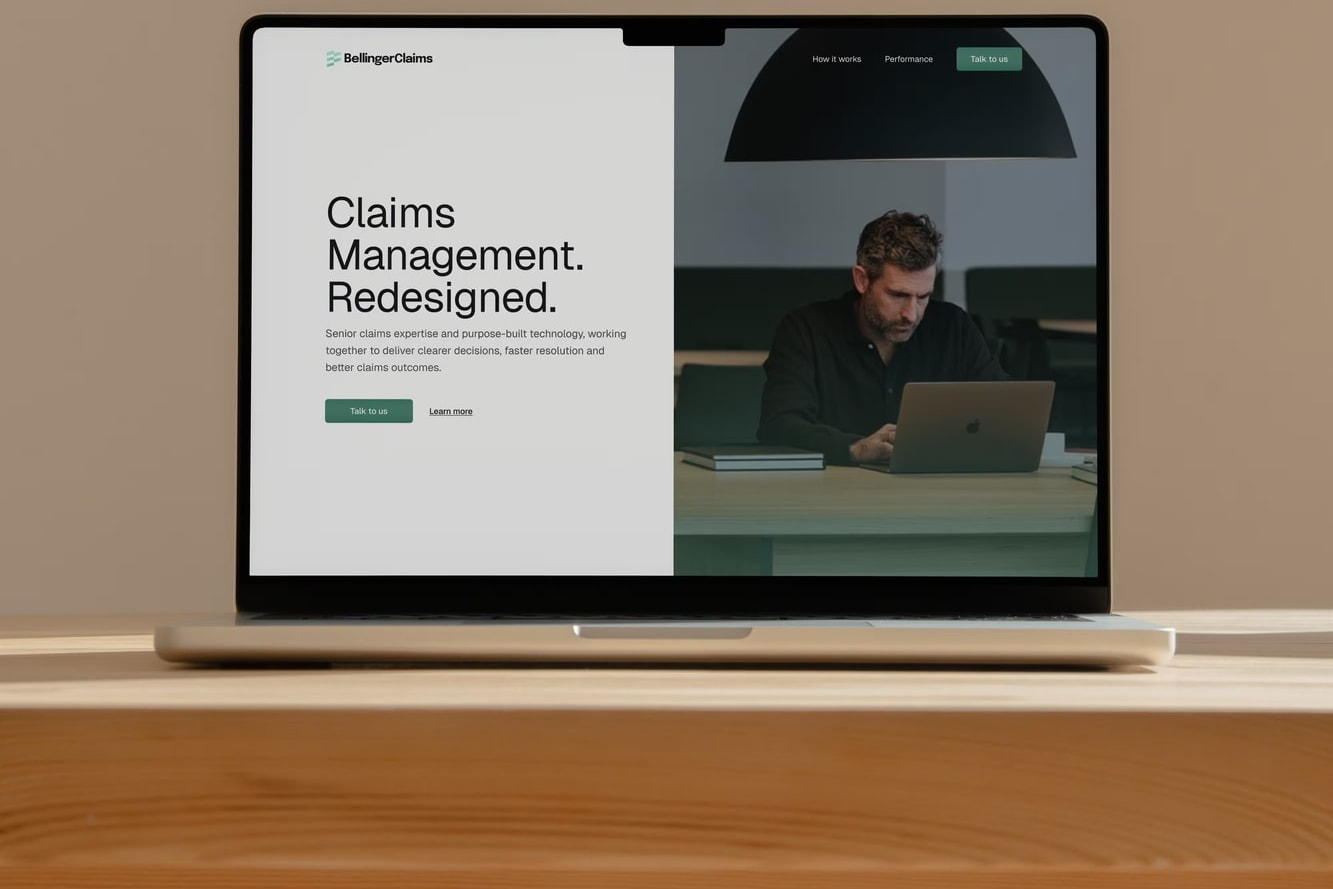
website build
The first build came back looking like a software product.
Animated cards, secondary colours, page conventions borrowed from SaaS. Bellinger sells premium consulting and the site was selling a platform. We went round on it more than any other part of the project, and each pass got closer without getting there.
Tom went back to the brand deck twice and compared the site against it. That’s how the problem got named. The rule we ended on was dark for statement, light for information. Dark hero, dark footer, everything explanatory in between.
Photography was the other thing Tom wanted solved.
Stop photographing people. Show the events that give rise to a claim instead. A sporting injury, a storm, a crash, a flood. Footage of the moment before the phone call, which is the part of the story a claimant and an insurer both recognise.
launch
Launched in six weeks
Bellinger Claims launched on 26 August 2026 with a website, a full identity, guidelines, a brand kit and templates.
Its new head announced the same day
The person hired to run it was announced at the same time, so the business arrived with a leader and a brand together.
Proposals in front of big insurers
Tom’s summary at handover was that he’s looking forward to putting proposals in front of big insurers with this on them.
the right order of things
Bellinger can now walk into an insurer who has never heard of it. That was the point of doing the work before launch instead of a year after it. This was the fourth piece of work for the group, after the Gow-Gates refresh, EnviroSure and Claims Gateway. Tom’s summary at handover was that he’s looking forward to putting proposals in front of big insurers with this on them.
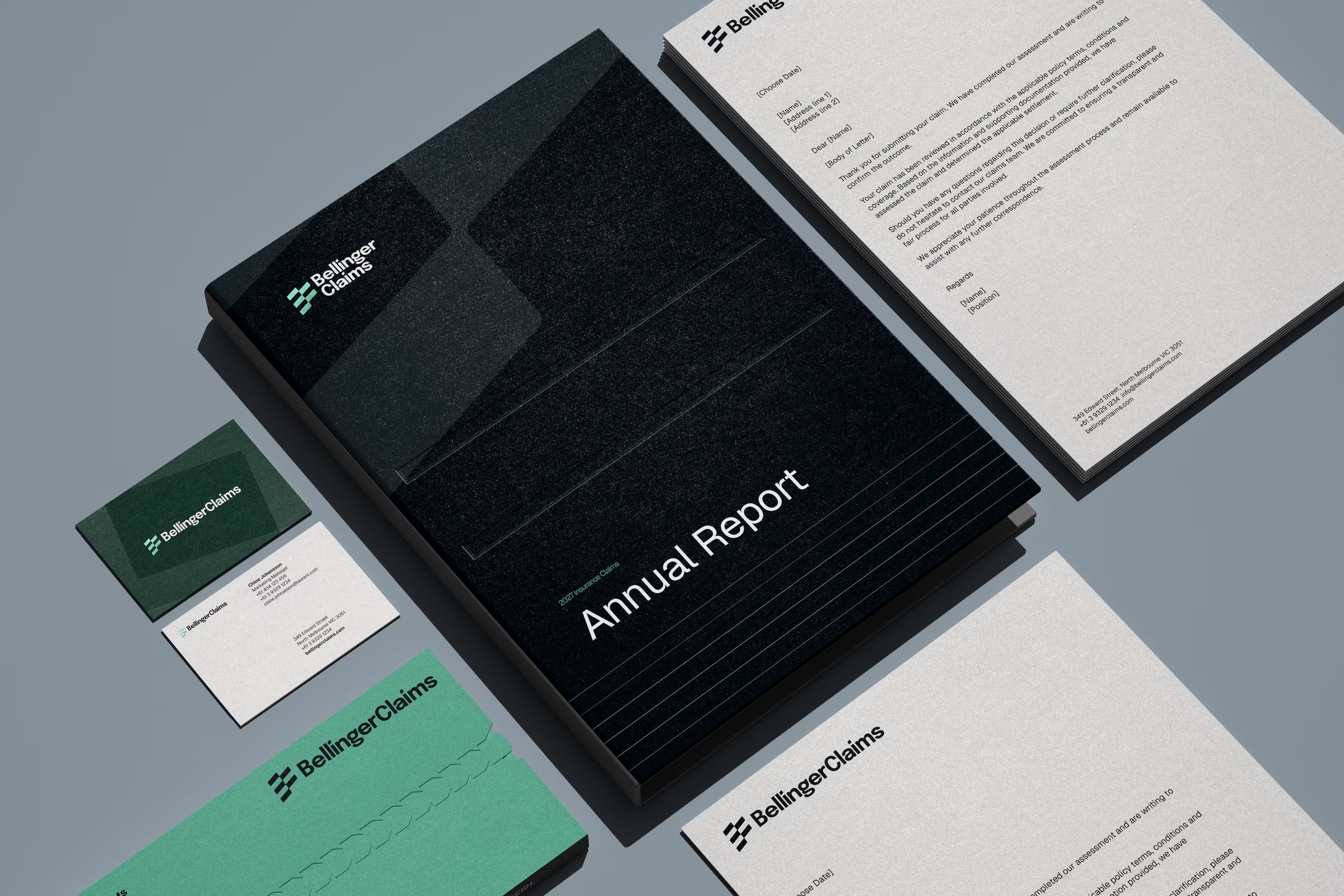
“I feel so much more confident in the name having seen the brand together. At first I really wasn’t confident in the name because it is a neutral name, it doesn’t mean anything. But when you put the logo and the brand around it, it’s got some authority to it.”